

Is Ford BlueCruise Worth It in 2025? Hands-Free Driving Explained for New Buyers
If you’re curious about Ford’s hands-free driving and wondering whether Ford BlueCruise is worth it, you’re in the right place. This technology is designed to simplify highway driving by letting you remove your hands from the wheel in designated areas. Our team at ORO Ford put together this guide to explain what BlueCruise is, how it works, and the benefits it can offer. Let’s take a closer look at whether it fits your driving style in Oracle, Arizona.
What Is Ford BlueCruise?
Ford BlueCruise is an advanced driver-assistance system that allows you to drive hands-free on designated highways known as Blue Zones. These zones stretch across more than 130,000 miles in the U.S. and Canada and offer a taste of semiautonomous driving without requiring your hands on the wheel the entire time. It is not fully self-driving, so you still need to stay alert and be ready to take control.
This technology combines adaptive cruise control, lane-keeping support, and speed sign recognition to help keep your vehicle centered in its lane and moving at an appropriate speed. The goal is to reduce driver fatigue and make longer highway drives feel more relaxed while also improving safety. A driver-facing camera monitors attention to help make sure you stay engaged with the road.
How Does Ford BlueCruise Work?
When you enter a Blue Zone, your dashboard displays a blue indicator showing that BlueCruise is available. You then press the adaptive cruise control button on the steering wheel to activate the system. Once engaged, BlueCruise can handle steering, acceleration, and braking while helping keep the vehicle centered in its lane without you holding the wheel.
BlueCruise works alongside Ford’s Co-Pilot360 tech package, which uses radar, cameras, and GPS mapping. These systems work together to create a broader view of your surroundings so the vehicle can respond to traffic and road conditions in real time. The driver-monitoring camera also helps confirm that you are paying attention. If you become distracted, the system will alert you to refocus.

What Are the Benefits of Using Ford BlueCruise?
Below are five key benefits of Ford BlueCruise.
Enhanced Safety on Arizona Highways
Ford BlueCruise can make highway driving safer by assisting with steering, braking, and acceleration while helping the vehicle stay in its lane. It constantly monitors surrounding traffic and road conditions, which can help reduce drifting and lower the chance of certain collisions. The driver-monitoring camera also checks to make sure you are paying attention and sends alerts if you become distracted.
Reduced Driver Stress and Fatigue
Long highway drives can be tiring, but BlueCruise helps reduce the workload by allowing hands-free driving in approved areas. It assists with speed control, lane centering, and traffic flow, which can make long-distance travel and stop-and-go traffic feel less exhausting. That extra support can help make the drive more comfortable.
Driver Convenience and Productivity
BlueCruise adds convenience during long drives by taking over some of the repetitive highway tasks. While you still need to stay attentive and ready to respond, the reduced steering burden can make the drive feel smoother and less demanding.
Continuous Updates and Expanding Vehicle Coverage
Ford continues to improve BlueCruise through over-the-air software updates. That means you can receive newer features and refinements without making a separate dealership visit. Blue Zones also continue to expand, allowing more drivers to use the system across a growing range of routes.
Advanced Lane Change and In-Lane Repositioning Assistance
BlueCruise includes advanced features such as Lane Change Assist, which can help the vehicle change lanes when you signal and conditions are safe. In-Lane Repositioning can gently shift the vehicle within the lane to create more space from nearby traffic. These features can improve both comfort and confidence on busier highways.

Additional Ford BlueCruise Questions Answered
What is Ford BlueCruise and how does it work?
Ford BlueCruise is a hands-free driver-assistance technology that allows you to drive on designated highways, called Blue Zones, without keeping your hands on the wheel. It uses advanced cameras, radar, and driver-facing monitoring to maintain lane position, adjust speed, and keep a safe distance from other vehicles. Unlike standard adaptive cruise control, BlueCruise can make subtle steering adjustments for curves and traffic flow.
Which Ford vehicles offer BlueCruise?
BlueCruise is available on many new Ford models, including the F-150, Mustang Mach-E, Expedition, and select trims of the Edge and Explorer. Availability depends on trim level and option packages. Newer Ford models often include a trial subscription, usually 90 days or three years depending on the model, before a paid plan is required.
Do I still need to pay attention while using BlueCruise?
Yes. BlueCruise is classified as a Level 2 driver-assistance system, which means you must remain alert and ready to take control at all times. A driver-facing camera monitors your eyes and head position to ensure you’re paying attention. If you look away too long, the system will alert you and eventually disengage if you do not respond.
How often are BlueCruise maps and features updated?
Ford continuously updates BlueCruise through over-the-air software updates. Blue Zone maps expand regularly as Ford validates new highway sections. Features such as Lane Change Assist and predictive speed assist are also rolled out through OTA updates, so keeping your vehicle connected to Wi-Fi helps ensure you receive the latest improvements.
Can BlueCruise be used in all weather conditions?
BlueCruise works best in clear conditions with visible lane markings. Heavy rain, snow, fog, or worn road paint can limit functionality. One benefit is that BlueCruise will alert you and return control if conditions prevent safe operation, rather than shutting off without warning. Keeping cameras clear and using built-in defrosters can help improve performance in poor weather.
How does BlueCruise differ from competitors like Tesla Autopilot?
Unlike Tesla’s system, which requires a light touch on the wheel, BlueCruise uses an infrared camera to monitor your gaze, allowing true hands-free driving in approved areas. Another advantage is that Ford publishes an expanding map of supported highways, so you know where the system is designed to work reliably.
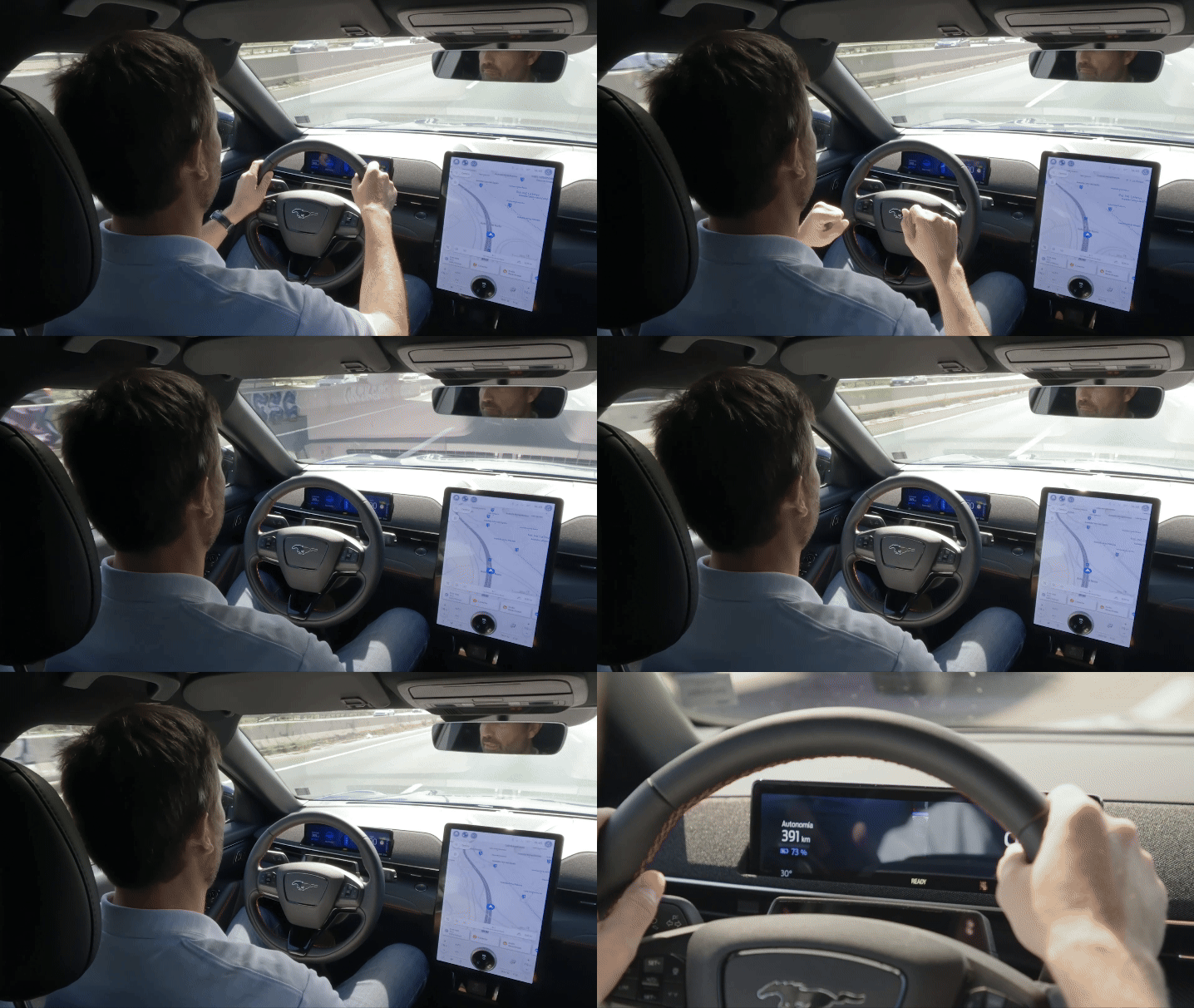
Vehicles Compatible With Ford BlueCruise
Ford has rolled out BlueCruise on many of its popular models, including the Mustang Mach-E, F-150, and Explorer. These vehicles require the Co-Pilot360 Active 2.0 package for BlueCruise to work. If you are looking to buy a new Ford, you can often add BlueCruise at the time of purchase or sign up for it later.
This growing compatibility means more drivers can experience hands-free highway driving across a wider range of Ford vehicles. Whether you want a sporty electric SUV or a capable pickup, there is a good chance a BlueCruise-equipped option can fit your lifestyle.
Why BlueCruise Could Be Your Next Best Driving Companion
Ford BlueCruise changes the highway driving experience by combining convenience, safety, and advanced technology. It is not fully self-driving, so you are still responsible for staying alert, but it can make longer trips and heavy traffic feel easier to manage. If you want a smarter, less stressful way to handle highway travel, BlueCruise is worth considering.
Ready to experience BlueCruise hands-free driving for yourself? Visit ORO Ford to explore BlueCruise-equipped vehicles and learn how this technology can fit into your daily driving or weekend travel plans. Do not just drive. Drive smarter with Ford BlueCruise.
Images by OEM

0 comment(s) so far on Is Ford BlueCruise Worth It in 2025? Hands-Free Driving Explained for New Buyers